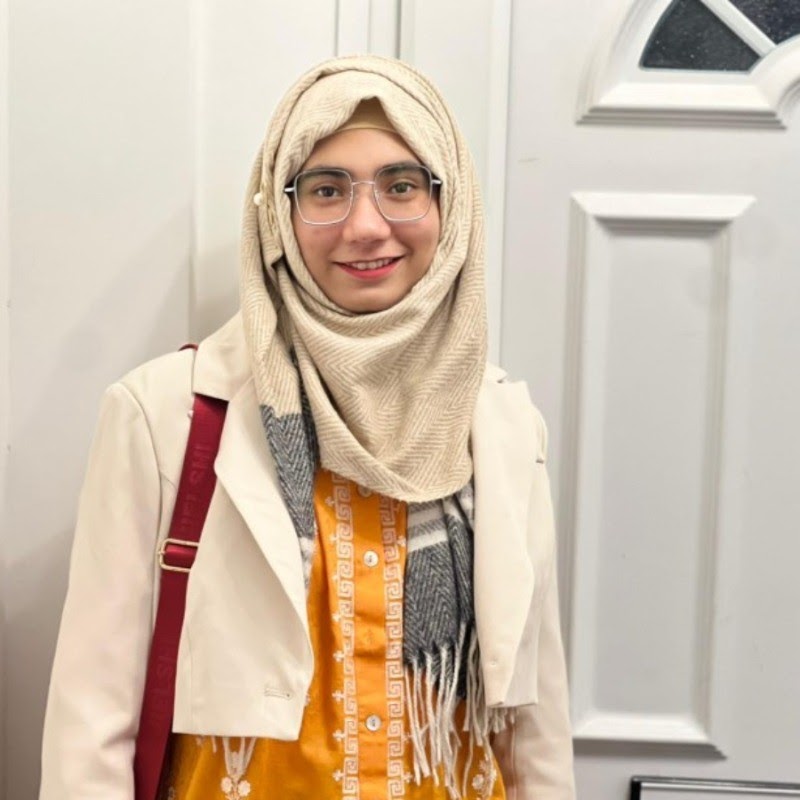
I am applying for the Student Leader position because I believe leadership is not about holding a title — it is about creating systems where every student feels heard, supported, and empowered. My name is Sara Tahir. I am an MSc Global Public Health student and a qualified Speech and Language Therapist with professional experience supporting autistic children, individuals with learning disabilities, and vulnerable communities. Throughout my academic and professional journey, I have consistently worked with individuals whose voices are often overlooked. That experience has shaped my leadership philosophy: representation must be active, inclusive, and transformative — not symbolic. As a current Student Representative and newly selected Student Ambassador, I have already engaged with student concerns, participated in institutional discussions, and contributed to initiatives such as the Learning and Teaching Conference. These experiences have shown me that meaningful change requires strategic communication, structured advocacy, and collaboration across different levels of the university. I am applying because I see gaps that can be strengthened: clearer communication between students and decision-makers, better support for commuting students, greater inclusion of international and mature students, and more structured opportunities for leadership development. My background in public health has trained me to analyse systems critically, identify inequalities, and design solutions rooted in evidence and community participation. I want to bring that systems-thinking approach into student leadership. Leadership, to me, is not about visibility — it is about responsibility. It means listening deeply, challenging constructively, and ensuring policies reflect the diverse realities of our student body. I want to help build a university culture where inclusion is practical, not just aspirational; where wellbeing is proactive, not reactive; and where student voices influence real decisions. I am not applying simply to represent students — I am applying to advocate, organise, and collaborate in ways that leave a sustainable impact.
If elected, my priorities would focus on three core areas: student voice, wellbeing, and equitable opportunity. 1. Strengthening Student Voice and Representation Many students share concerns but feel unsure about where their voices go or whether they lead to change. I would prioritise creating clearer communication channels between students and university leadership — ensuring feedback loops are transparent and outcomes are visible. Representation should not end at listening; it must translate into measurable action. I want students to see how their input shapes real decisions. 2. Improving Wellbeing Through Preventive Support As a Global Public Health student and healthcare professional, I understand that wellbeing is not only about crisis response — it is about prevention and environment. Academic pressure, financial stress, commuting challenges, and isolation affect many students. I would advocate for practical support systems, including better scheduling considerations for commuters, improved awareness of available services, and collaboration with societies to create stronger peer-support networks. Wellbeing should be proactive, not reactive. 3. Inclusion and Equal Access to Opportunities Not all students experience university in the same way. International students, mature students, students with disabilities, and those balancing work and study often face invisible barriers. My priority would be to work towards more inclusive policies and wider access to leadership, employment, and development opportunities. Inclusion must move beyond statements and become embedded in how decisions are made. I do not claim to have all the answers. However, I bring a systems-thinking approach grounded in public health, community advocacy, and my experience as a Student Representative and Ambassador. I will prioritise listening first, collaborating widely, and pushing for practical solutions that reflect the diversity of our student community. Leadership is not about quick promises — it is about building structures that last beyond one term.
I bring a combination of professional expertise, student leadership experience, and a deep commitment to inclusive advocacy. As a qualified Speech and Language Therapist, I have worked with autistic children, individuals with learning disabilities, and vulnerable populations. My professional background has trained me to listen actively, communicate clearly, and advocate for individuals whose voices are often unheard. These are not just transferable skills — they are leadership foundations. Currently, as an MSc Global Public Health student, I am trained to think critically about systems, inequalities, and policy impact. Public health has taught me how to analyse complex problems, identify root causes, and develop evidence-informed solutions. I do not approach challenges reactively; I approach them strategically. Within the university, I serve as a Student Representative and have been selected as a Student Ambassador. These roles have allowed me to engage with students across cohorts, raise concerns constructively, and participate in institutional discussions. I understand the importance of using the right channels and strategies to ensure student concerns are heard effectively. Representation, in my view, must be both vocal and diplomatic. In addition, I bring strong communication skills, confidence in public speaking, and experience participating in academic conferences and leadership discussions. I am comfortable engaging with senior staff while remaining approachable and accessible to students. Most importantly, I bring integrity and responsibility. I am not seeking leadership for visibility; I am seeking it to create meaningful impact. My passion lies in inclusion, wellbeing, and ensuring that every student — regardless of background — feels represented and supported. People are not just voting for policies; they are voting for trust. I am committed to earning and maintaining that trust through transparency, accountability, and action.